
|
|
|||||||||||||||||
|
|
|
|||||||||||||||||
Clinical and dosimetric dataset of time-to-event normal tissue complication probability for osteoradionecrosis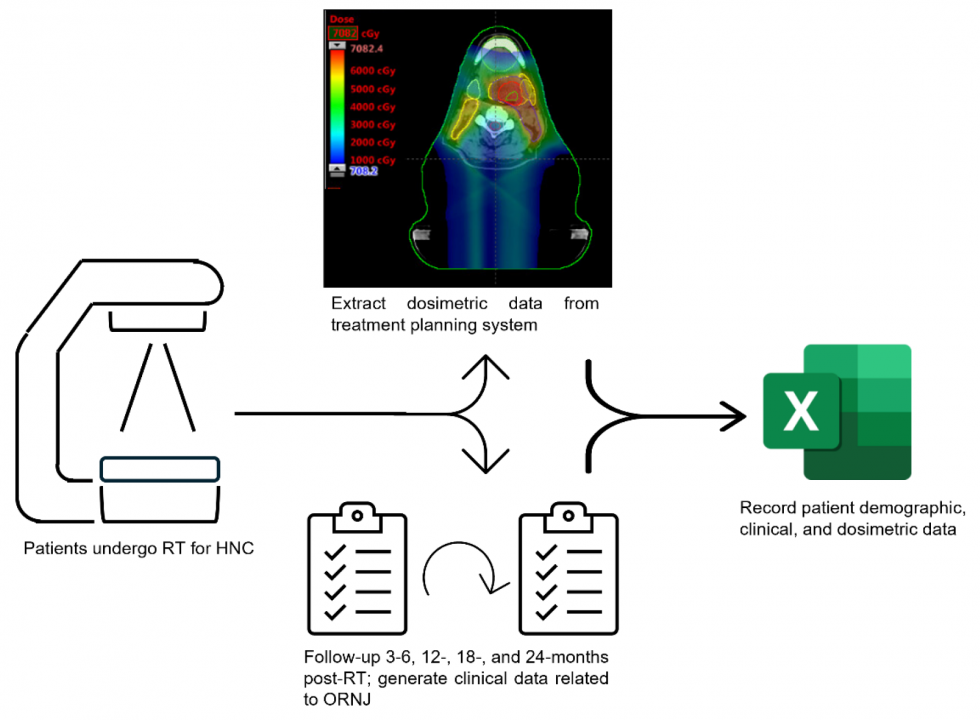
Authors: West, N.A., Kamel, S., Wentzel, A., Kaffey, Z., Abdelaal, M., Marai, G.E., Canahuate, G., Zhang, X., Chen, M.M., Wahid, K.A., Rigert, J., Brock, K.K., Chambers, M., Otun, A.O., et al
Publication: Nature Scientific Data URL: https://doi.org/10.1101/2025.08.12.25333524 Osteoradionecrosis of the jaw (ORNJ) is a radiation-induced late toxicity that can dramatically decrease patients’ quality of life. Recent increases in survival rates of head and neck cancers associated with human papillomavirus (HPV) infection have resulted in a higher frequency of radiation-induced toxicities, particularly ORNJ. Recent work with Normal Tissue Complication Probability (NTCP) models and a Weibull Accelerated Failure Time (WAFT) model have further developed our understanding of ORNJ clinical/dosimetric risk factors and longitudinal features, respectively. In this data descriptor, 1129 head and neck cancer (HNC) patients received curative intent radiotherapy (RT) at MD Anderson Cancer Center and were follow-up with clinical and radiological assessments at 3-6, 12, 18, 24 months, and then annually following the conclusion of RT for development of ORNJ. This data, in addition to the patients’ demographic, supplementary clinical, and dosimetric information was recorded in a comma-separated value file embedded within this data descriptor. This large, longitudinal dataset is a significant resource for further systematic analysis of post-RT normal tissue outcomes in HNC. Date: November 1, 2025 Document: View PDF |