
|
|
|||||||||||||||||
|
|
|
|||||||||||||||||
Towards a GPU-accelerated web-based graph rendering framework for large-scale protein networks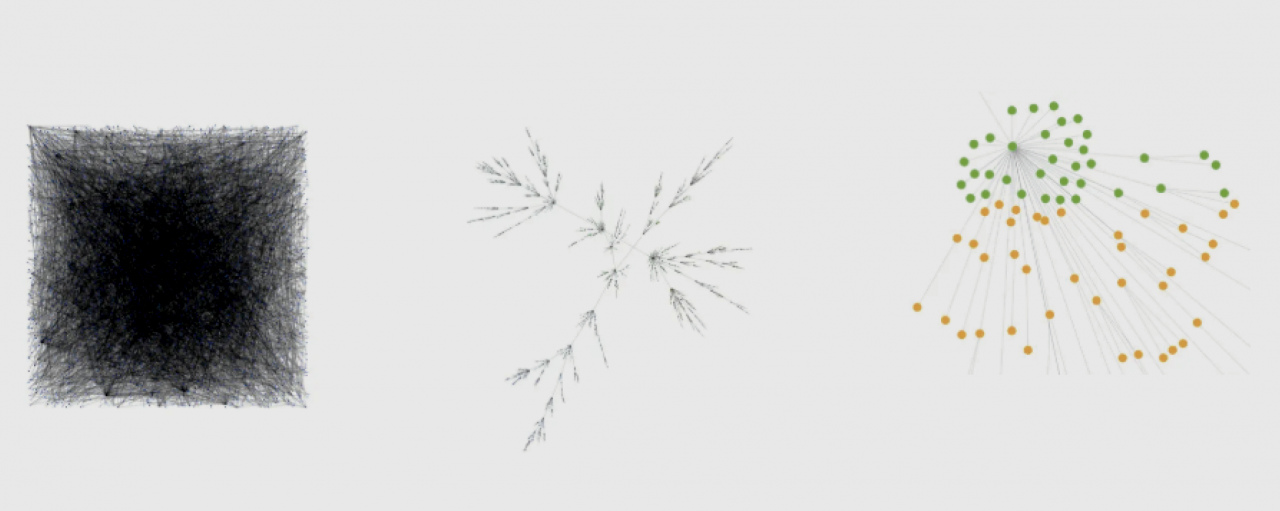
Authors: Lu, J., Dyken,L., Shilpika, Vishwanath, V., Papka, M. E.., Kumar, S.
Publication: International Conference for High Performance Computing, Networking, Storage, and Analysis (SC '25), St. Louis, MO Background: Protein–protein interaction (PPI) networks are critical for understanding cellular processes. They are often large-scale and can be generated in real time from experimental or computational pipelines. Challenge 1: Existing frameworks (D3.js, etc) struggle with computational scalability and cannot efficiently handle real-time updates. Challenge 2: Current WebGPU-based systems such as GraphWaGu offer high-performance rendering but lack comprehensive APIs, biology-specific layouts (e.g., hive plots), dynamic filtering capabilities, and support for rendering directed graphs with arrowheads or other directional indicators. Challenge 3: Web environments lack specialized libraries for large-graph visualization, and static approaches fail to adapt to changing network density. Goal 1: We extend GraphWAGU to support multiple layout algorithms (hive plots, etc.), dynamic density adjustments, and a D3.js-like API for graph creation and rendering. Goal 2: We set new benchmarks for large-scale, real-time graph visualization in web environments, enabling biologists to interactively explore and analyze complex PPI networks through intuitive, high-performance tools. Date: November 16, 2025 - November 21, 2025 Document: View PDF |